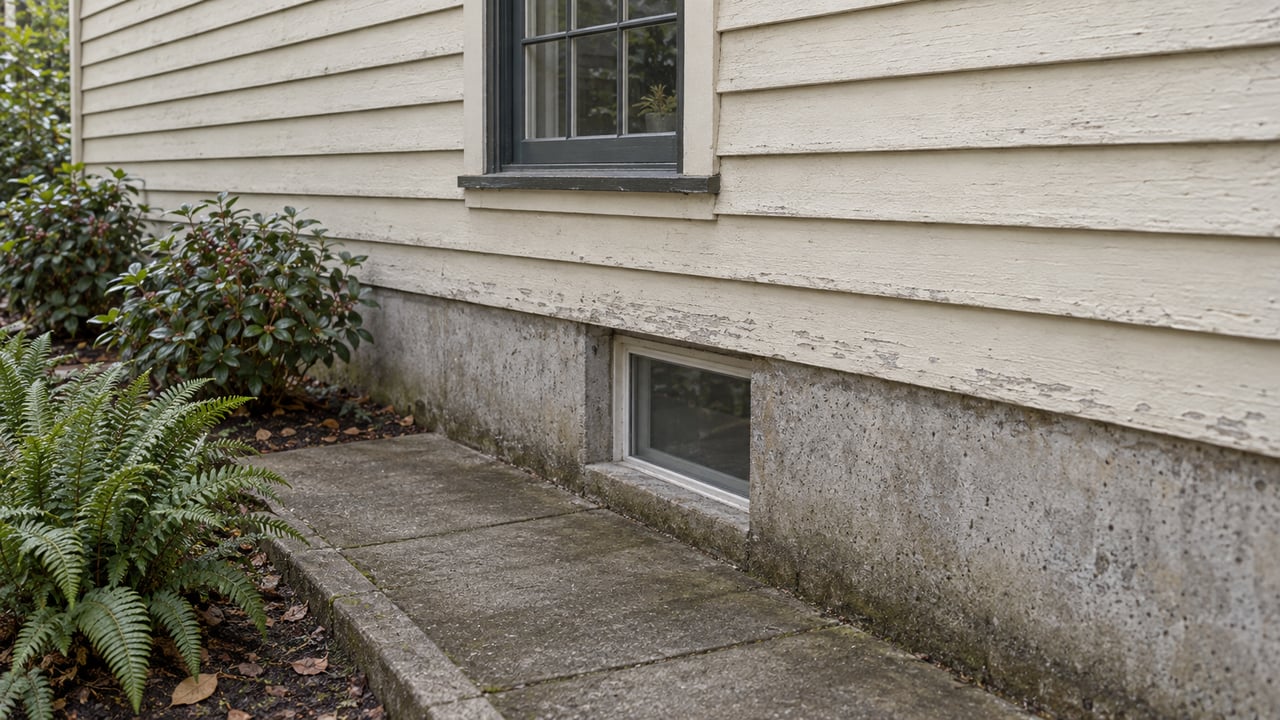
Walk the sidewalks of Rucker Hill or the streets between Grand Avenue and Colby in Bayside and you will eventually see it: a capped iron pipe rising a few inches out of a lawn, sometimes painted over, sometimes rusted the color of the surrounding soil. Most people who pass it never register what it is. A home inspector will. It is often the only visible sign that a house heated with oil before it heated with anything else, and that somewhere under the yard, a steel tank that has not been touched in decades is still there.
That single detail sets off a chain of events that has almost nothing to do with the price of the home and almost everything to do with when in the year it happens.
The Neighborhoods Where This Question Comes Up
Everett's oldest housing stock sits in a specific ring of neighborhoods, and the ring is not a coincidence. Riverside, bounded by Pacific Avenue, 19th Street, Broadway, and the Snohomish River, has been settled since 1892 and is generally considered the oldest neighborhood in the city. Bayside was platted the same year and today mixes large historic homes like the Hartley Mansion with small former mill worker cottages. Rucker Hill, the wooded rise above Port Gardner Bay, was built out mostly between 1905 and the Depression in Colonial Revival, American Foursquare, Craftsman, and Bungalow styles, and its early residents were the mill owners and business families who ran the young city below.
Homes built in that window, roughly 1900 through the 1960s, were heated with oil as a matter of course. Natural gas and electric heat pumps did not become widely available replacements until the 1970s, and when homeowners switched, plenty of them disconnected the furnace and left the buried tank exactly where it was. It never came up again until the house changed hands.
That is the pattern working itself out right now across Historic North Everett, Northwest Everett, Port Gardner, and the Grand Avenue corridor: a housing stock old enough that oil heat was standard, sitting on lots that have rarely if ever had that tank professionally addressed.
What an Inspector Actually Finds, and What It Doesn't Prove
A standard home inspection does not locate a buried tank. What it can find are indicators: a capped fill pipe, a vent pipe, old copper fuel lines, a disconnected boiler hookup, a patch in the yard or foundation that does not match anything else. None of that confirms a tank is present, let alone that it has leaked. Confirming presence requires a separate service, a tank sweep using a metal detector or ground-penetrating radar, performed by someone who does this for a living.
Washington's standard seller disclosure form, NWMLS Form 17, asks directly about underground oil tanks in its environmental section. A seller who has reason to believe a tank exists needs to say so. A seller who genuinely does not know can check that box, but on a home built before 1970, a "don't know" answer tends to invite closer scrutiny rather than close the question, because the buyer's agent and often the buyer's lender know exactly what that answer usually means on a house this age.
Everett's Own Permit Process
This is where the Everett-specific mechanics matter, and where a lot of general guidance written for Seattle stops being useful. Everett runs its own permitting process through the Everett Fire Department, separate from anything Seattle requires. A site-specific permit is required before any decommissioning work can begin, whether the tank is being removed or closed in place, and the application goes through the city's own online permit system. Once the work is done, a Tank Decommissioning Report has to be completed and submitted to the Everett Fire Department within 30 days, signed by the property owner and by an ICC-certified Underground Storage Tank Decommissioner who performed or supervised the job.
If the property sits in unincorporated Snohomish County rather than inside Everett's city limits, the county has its own version of the same paperwork. Snohomish County's Public Health Department maintains its own Oil Tank Decommission Report, filed separately to the county's permit tech office. A homeowner half a mile from the same buried tank, on the other side of a city boundary, is filing a different form to a different office. Neither path is complicated on its own, but neither one is instant, and a seller who assumes "the state handles this" or "my neighbor just called someone" is skipping a step that has its own paperwork trail.
Where the Real Friction Sits
None of that permitting process is the part that actually stalls a closing. The part that does is money, and specifically, timing money against a transaction calendar that was never built to match it.
Washington's Pollution Liability Insurance Agency runs the Heating Oil Loan and Grant Program, which can provide up to $75,000 to a qualified property owner, including up to $60,000 specifically for cleanup costs if contamination is found. That is meaningful money for a homeowner suddenly facing an environmental question they did not budget for. The catch is that the program does not run continuously. It opens for defined application cycles, roughly twice a year, each one lasting 45 days, generally in the spring and again toward the end of the year. The 2026 spring cycle ran from May 4 through June 18 and has been closed for months. The next cycle follows the program's usual late-year pattern, though PLIA only publishes exact dates once they are close.
Home inspections, meanwhile, happen on their own calendar entirely, usually one to two weeks before a scheduled closing, driven by when a house goes under contract rather than by when a state grant program happens to be accepting applications. A tank issue that surfaces during an October inspection in Bayside or Rucker Hill lands in the exact gap between one closed application window and a not-yet-opened one. The seller is not choosing between fast help and slow help. They are choosing between paying out of pocket now, negotiating a price credit at closing, or asking a buyer to wait for a program that has not reopened yet.
That gap is the actual risk for anyone selling an older home in these neighborhoods this fall. It is not that a tank exists. Plenty of tanks exist and cause no problem at all once someone actually looks at them. The risk is discovering the question at the one point in the calendar when the safety net for answering it expensively is not available.
What This Means Before You List
For a seller with a pre-1970 home in Riverside, Bayside, Rucker Hill, Port Gardner, or the historic Everett core, the sequence that avoids a fall closing-week problem starts well before a listing goes live.
- Walk the yard and foundation for visible indicators: capped pipes, old fuel lines, patched concrete near where a furnace room would have been.
- If anything looks like it might be there, commission a tank sweep before listing rather than waiting for an inspector to raise the question during a live transaction.
- Review what you actually know before filling out Form 17. A vague or uncertain answer is itself information a buyer's agent will act on.
- If a tank is confirmed, get the Everett Fire Department permit (or the Snohomish County equivalent if the property is outside city limits) started early rather than after an offer is already in hand.
- Understand, going in, that if contamination turns up and the PLIA cycle happens to be closed when it does, the timeline and the cost fall on you until the next window opens, not on the transaction schedule you were hoping for.
Full removal rather than a fill-in-place closure lets everyone see the soil directly, which tends to resolve a nervous buyer's lender question faster than any amount of paperwork about a tank still in the ground. That is a judgment call specific to each property, but it is one worth making months before a listing photo ever gets taken, not during an inspection period with a closing date already on the calendar.
A Few Questions Sellers Ask
Does a capped pipe in the yard mean there's definitely a tank? No. It is a visual indicator that something like a tank may exist, not proof. Only a tank sweep with proper equipment confirms presence.
What if my home is just outside Everett's city limits? Then the Everett Fire Department permit process does not apply, and the decommissioning report goes to Snohomish County's Public Health Department instead. The requirement itself does not go away, it just changes offices.
Can I list the home before I know whether a tank is there? You can, but a buyer's lender will very likely make the question a condition of closing once it comes up, which tends to cost more time and leverage than resolving it before the home ever hits the market.
Does the PLIA funding gap only affect sellers? It affects whoever ends up responsible for the cleanup cost, which in a purchase can become the buyer if that is how the offer gets negotiated. Either side benefits from knowing where the program's calendar sits before a price gets attached to the problem.
If you own or are considering an older home in Everett's historic core and want to know where your property actually stands on this question before it becomes someone else's closing-week emergency, Julie Ochoa can walk through what to check and when to check it.