If you have been watching Snohomish home prices from a distance, the numbers probably do not make sense yet. A citywide snapshot from March 2026 put the median sale price at $860,000. Two months later, the three-month window ending in May 2026 put it at $750,000. Neither number was wrong. Both came from the same city and roughly the same pool of active listings. What changed was not the market's temperature. What changed was which market sold.
Snohomish does not have one housing market wearing a single median price. It has three, and they do not compete with each other, price the same way, or attract the same buyer. A citywide median is just an average of whichever mix of those three happened to close in that window. Understand the split and the swinging number stops being confusing. It starts being useful.
Three Markets, One Zip Code
Snohomish's own market reporting describes the split cleanly, even if most portal searches never surface it. The first market is the historic core along First Street and the blocks around it, where Victorian and craftsman homes from the late 1800s and early 1900s sit on a supply that cannot grow. Nobody is building more of that inventory. The second is the acreage belt across the valley floor and the hillsides east and south of downtown, home to hobby farms, equestrian properties, and view parcels that price on land and utility rather than what the house down the street sold for. The third is the conventional middle: newer development on the hills above downtown and along the Bickford Avenue corridor, which behaves like a standard suburban resale market and competes directly with Lake Stevens and Monroe for the same buyers.
Each one has its own logic. None of them move in sync.
The Historic Core: Scarcity Sets the Price
Walk First Street on a Saturday and you will understand why buyers pay a premium for this pocket. The stretch between Union Avenue and Avenue D anchors what is often called the Antique Capital of the Northwest, with more than 175 antique dealers spread across malls and storefronts in commercial buildings dating from roughly 1880 to 1930. The Riverfront Trail runs along the water just behind the shops, and the surrounding residential blocks hold restored homes that no builder is putting up again.
That fixed supply layers a scarcity dynamic over ordinary demand. Condition, provenance, and restoration quality become real pricing variables in a way they rarely are in a standard subdivision. A buyer comparing two homes a few blocks apart in this pocket is not comparing square footage. They are comparing how carefully each one has been kept true to its era, and pricing follows that difference more than it follows the citywide median.
The Acreage Belt: A Regional Buyer, Not a City One
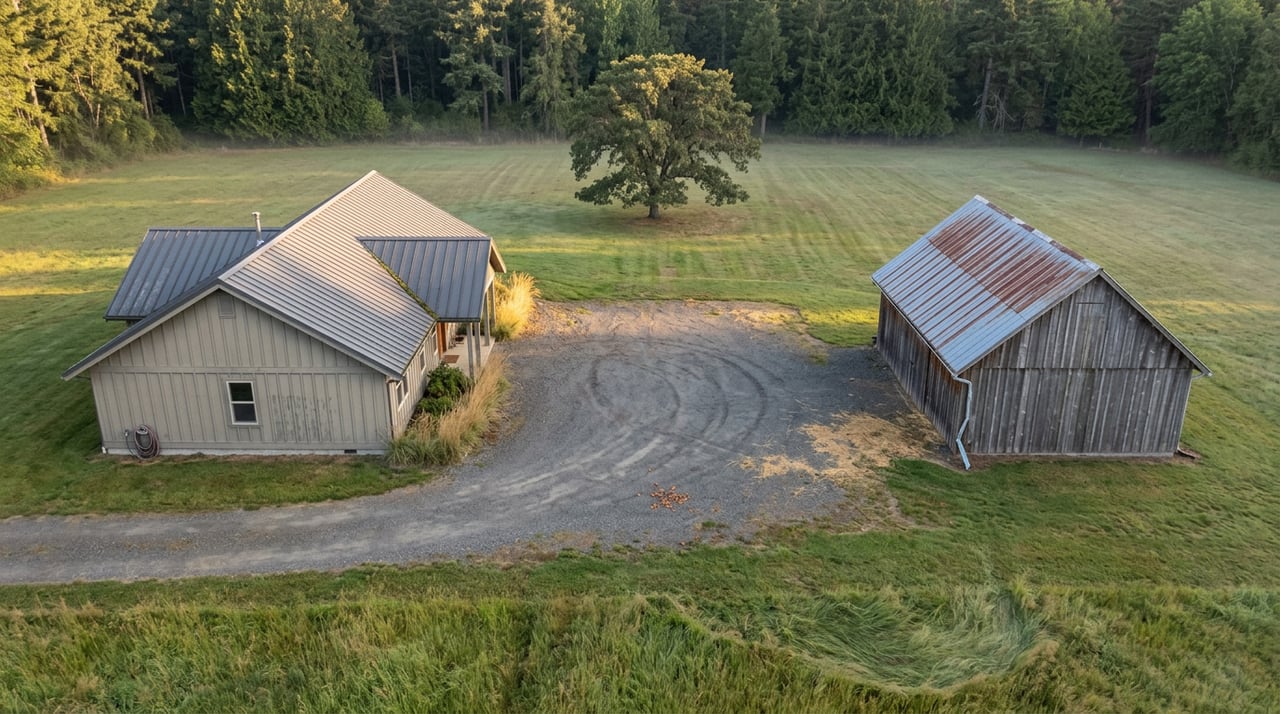
Head the other direction and the pricing logic flips entirely. The valley floor and the hillsides around Snohomish hold some of the closest hobby-farm and equestrian acreage to the region's job centers, and those properties price on land, water access, outbuildings, and usability rather than on nearby comps. The buyers shopping for them tend to search regionally, not city by city. Someone shopping for a five-acre parcel with a barn is comparing it to acreage in Monroe or Arlington just as readily as anything inside Snohomish's limits.
That regional pull is also where the real transaction friction lives. Any acreage property without a public water hookup needs a well and septic system approved by the Snohomish County Health Department before a building permit can be issued, and that approval process is its own timeline. The county reviews a site plan showing the well location and a 100-foot radius, along with nearby septic tanks, drainfields, buildings, and floodplain features, and a permit-exempt well does not mean the water supply is automatically ready to use. Buyers can pull existing as-built drawings and service history through the county's OnlineRME database before writing an offer, which is worth doing before assuming a rural property's systems are simply fine. None of this shows up in a median price. All of it shows up in how long an acreage closing actually takes.
The Conventional Middle: Where Comps Actually Work
Between those two extremes sits the segment that behaves the way most buyers expect a housing market to behave. Newer development on the hills above downtown and along Bickford Avenue gives families a straightforward way into the Snohomish School District without buying either a fixer-upper's restoration list or acreage's upkeep. This segment also accounts for the bulk of the city's actual closed sales, and it is priced the way suburban resale markets typically are: by comps, not by scarcity or acreage.
It is worth understanding why this growth concentrates specifically on Bickford Avenue. Downtown Snohomish is boxed in by two rivers and two highways, so the city has essentially one direction left to grow: north along that corridor. That geography is exactly why Bickford has absorbed most of the city's newer construction for years, and why a proposal now moving through city review matters to anyone comparing homes in this segment. A developer has filed plans for a 17.3-acre mixed-use project at 2502 to 2540 Bickford Avenue, branded Emblem Snohomish, that would bring 294 apartments and townhomes along with roughly 10,000 square feet of retail space to the corridor if it clears the city's review process. Whatever its outcome, the filing itself signals where new supply pressure is landing, and new supply on Bickford can shift the comp set for conventional-tier resale homes faster than most buyers expect.
What Each Market Actually Rewards
| Market | What Sets the Price | Who's Buying | What to Check Before You Offer |
|---|---|---|---|
| Historic core (First Street and surrounding blocks) | Condition, provenance, and restoration quality on a fixed supply of Victorian and craftsman homes | Buyers drawn to walkability and character that cannot be rebuilt | Age of systems, permit history on past additions, proximity to foot traffic |
| Acreage belt (valley floor and hillsides) | Land, water access, outbuildings, and usability rather than nearby comps | A regional buyer pool, not limited to Snohomish's city limits | Well and septic approval status, legal access, floodplain and critical-area overlays |
| Conventional middle (hillside development and the Bickford corridor) | Standard neighborhood comps, similar to most suburban resale markets | Families comparing Snohomish directly against Lake Stevens and Monroe | New construction nearby, since fresh supply on Bickford can move the comp set |
What This Means Before You Compare Prices
The practical takeaway is not that Snohomish is expensive or affordable. It is that the citywide median cannot tell you which one, because it never describes an actual house. It describes whatever blend of restored Victorians, hobby farms, and comp-driven resale happened to close in that window.
That has a direct effect on the county's broader numbers too. Snohomish County's own median sale price moved from $799,000 in July 2025 to $746,000 in July 2026, alongside active listings climbing roughly 37 percent year over year and months of supply rising from about 2.1 to 3.0. More inventory generally favors buyers, but a countywide easing does not mean every Snohomish segment eased the same amount. A conventional-tier buyer watching for more negotiating room is likely feeling that shift. A buyer chasing a restored craftsman two blocks off First Street may not feel it at all, because that market never had enough supply to loosen in the first place.
Before you anchor on any single median, or use one to compare Snohomish against Lake Stevens or Monroe, it helps to ask which of the three markets the specific address actually belongs to. That single question tells you more about likely price behavior, competition, and closing friction than the citywide number ever will.
Questions That Come Up When the Median Doesn't Add Up
Why did the reported median jump by more than $100,000 in just a few months? It almost always reflects a shift in which homes sold that month rather than a sudden change in value. A window with more acreage or historic-core sales pulls the median up. A window with more conventional-tier resale pulls it back down.
Does every acreage property in Snohomish need its own well and septic system? Not necessarily. Some parcels connect to public water. Where they do not, the Snohomish County Health Department requires an approved well and septic system before a building permit is issued, and reviewing that approval status early is part of sound due diligence on any rural purchase.
Is the conventional middle the best entry point for a first-time buyer in Snohomish? For many buyers it is, since it prices on standard comps and competes directly with nearby cities like Lake Stevens and Monroe rather than on scarcity or acreage. Whether it fits a specific budget and timeline still depends on the individual property and what is happening nearby, including any new construction along the Bickford corridor.
Snohomish rewards buyers and sellers who know which of its three markets they are actually standing in. If you are trying to figure that out for a specific address, or you want a second opinion on what a listing's price is really telling you, Julie Ochoa works across Snohomish and the surrounding Snohomish County communities every day. Let's Connect and walk through it together.